Regional Transit Tax Measure (RTM) locks in 14 years of funding for system built for a world that's gone
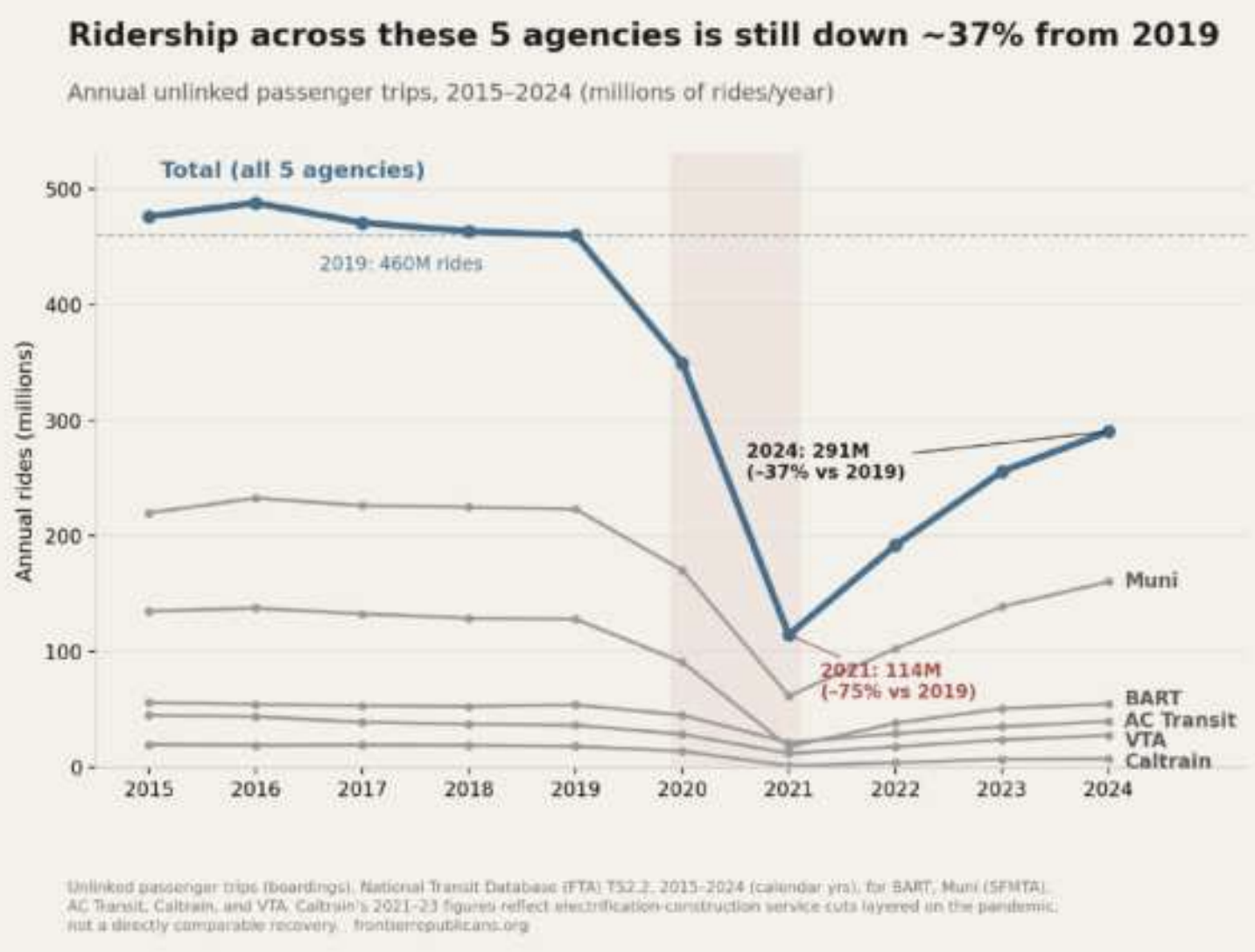
The pandemic shock was real, and it wasn't transit agencies' fault. But their response is to preserve a cost and compensation structure built for the old ridership level rather than adapt it- and voters are being asked to bail out that choice for the next fourteen years, no matter what happens to costs, ridership, or how the Bay Area gets around. Taxpayer subsidies per Bay Area transit trip have grown 2.75x in ten years — from $3.53 to $9.69 — even as ridership across BART, Muni, AC Transit, Caltrain, and VTA remains down 37% from 2019. This November's Regional Transit Measure locks in that same cost structure for 14 more years, no reforms required. https://nonewtransittax.com/
Reject the Transit Tax this November -and soften the landing.
If the tax fails, BART's own board-approved contingency plan calls for closing 15 stations; Caltrain's calls for ending service after 9 p.m. and closing a third of its stations. Those cuts would hit hardest the roughly one in four Bay Area adults who ride transit weekly. That pain can be reduced without locking in 14 years of new taxes: the state could redirect a portion of the $1 billion in cap-and-invest funds now earmarked for high-speed rail and free up billions more by pausing megaprojects sized for pre-pandemic ridership, like BART's Silicon Valley Phase Il extension.
Develop a new regional transit plan based on post-pandemic reality.
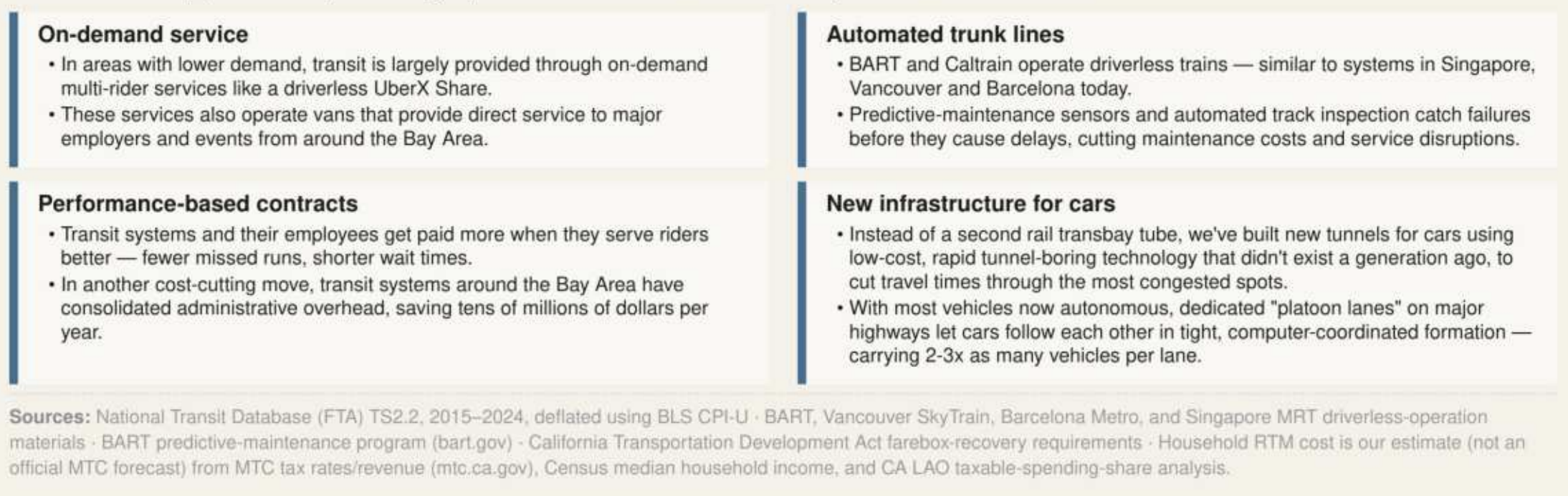
Most office workers work from home (WFH) at least one day a week, usually Fridays. We need a new plan for Bay Area transit sized for today's ridership, not pre-pandemic assumptions. It should require binding cost and compensation reforms, tie service levels to real ridership, and set concrete benchmarks for cost-saving technology - automated trains, on-demand shuttles, predictive maintenance. And it should move fast: transit plans typically take years and rest on utopian assumptions that never pan out. A tight, one-year deadline would force realistic choices instead.
Return to voters in 2028 with a smaller, smarter measure.
Maintaining Bay Area transit will take more money than agencies currently have. But voters should be asked for modest, targeted funds - paired with real cost reductions (automated trains, fewer massive capital projects) sized to today's ridership, not yesterday's. The priority: protect bus service for the low-income residents who depend on transit most.
Imagining the Bay Area Transit System of 2050
It's 2050 - A rider in Fremont steps outside, and within ninety seconds a shared, autonomous shuttle glides up, dispatched the instant she opened the app, not on a fixed 20-minute schedule. The shuttle links her to a driverless high-frequency rail trunk line. She pays once for this trip, and the operators get paid a little extra because her trip was fast and reliable.