The Blue Tsunami was inevitable. In nearly every mid-term election since World War II, the opposing party to the President gained seats in Congress. The Blue Tsunami of 42 seats is an almost typical 10% gain by the opposing party. House elections are every two years, so Congress experiences the most volatility by design in our Constitution as the 435 House representatives are the closest and most accountable to the people. Republicans gained 55 House seats in 1946 (Truman), 47 in 1966 (Johnson), 54 in 1994 (Clinton), and 63 in 2010 (Obama), while Democrats gained 49 House seats in 1958 (Eisenhower), 49 in 1974 (Ford), 31 in 2006 (W Bush) and 41 in 2018 (Trump 1st term).
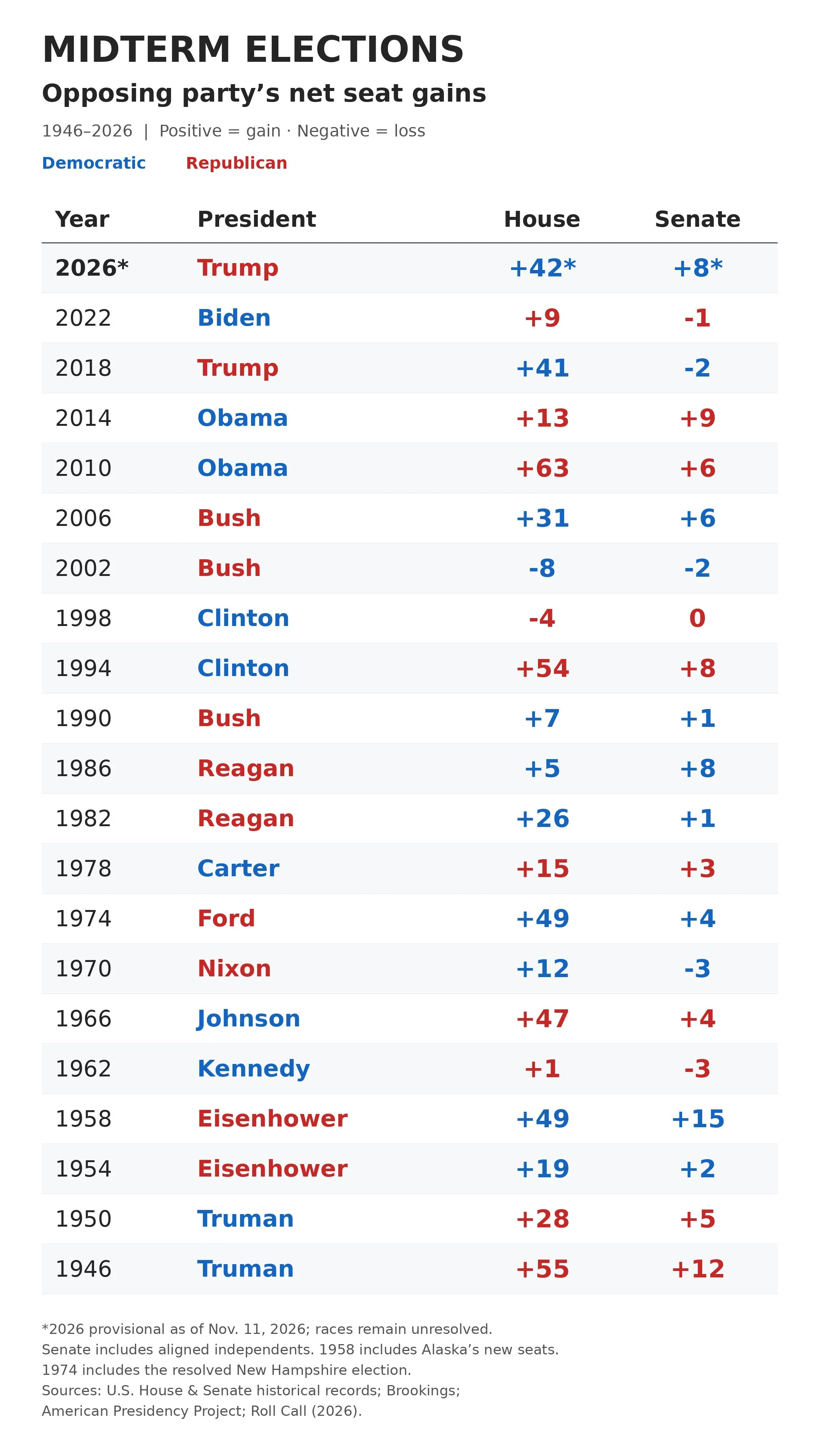
ChatGPT generated table
Checks and Balances
In 1788, James Madison published Federalist 51: The Structure of the Government Must Furnish the Proper Checks and Balances Between the Different Departments in newspapers to convince the 13 original states to adopt the new Constitution, and is best known for the saying “If men were angels, no government would be necessary.”
The Framers assumed “political elites” (parties) would seek to maximize political power, so they designed Congress to be a check and balance to the President (Executive Branch), and vice versa with the President’s veto power.
In contrast, under Parliamentary democracies, the majority party in the legislature controls the Executive (Prime Minister) so government policy swings are not moderated until a vote of No Confidence passes to bring down the governing party and force new elections.
Dissatisfaction with inflation/affordability, the War in Iran, ineffective and chaotic tariffs, and overzealous ICE deportation were the top reasons given in exit polling why voters gove control of Congress to the Democrats, as a counter balance and check on President Trump. Despite the President’s business acumen, he should’ve known from his years on The Apprentice that over-promising and under-delivering is a sure way to get fired.
Compromise is how our Constitution works
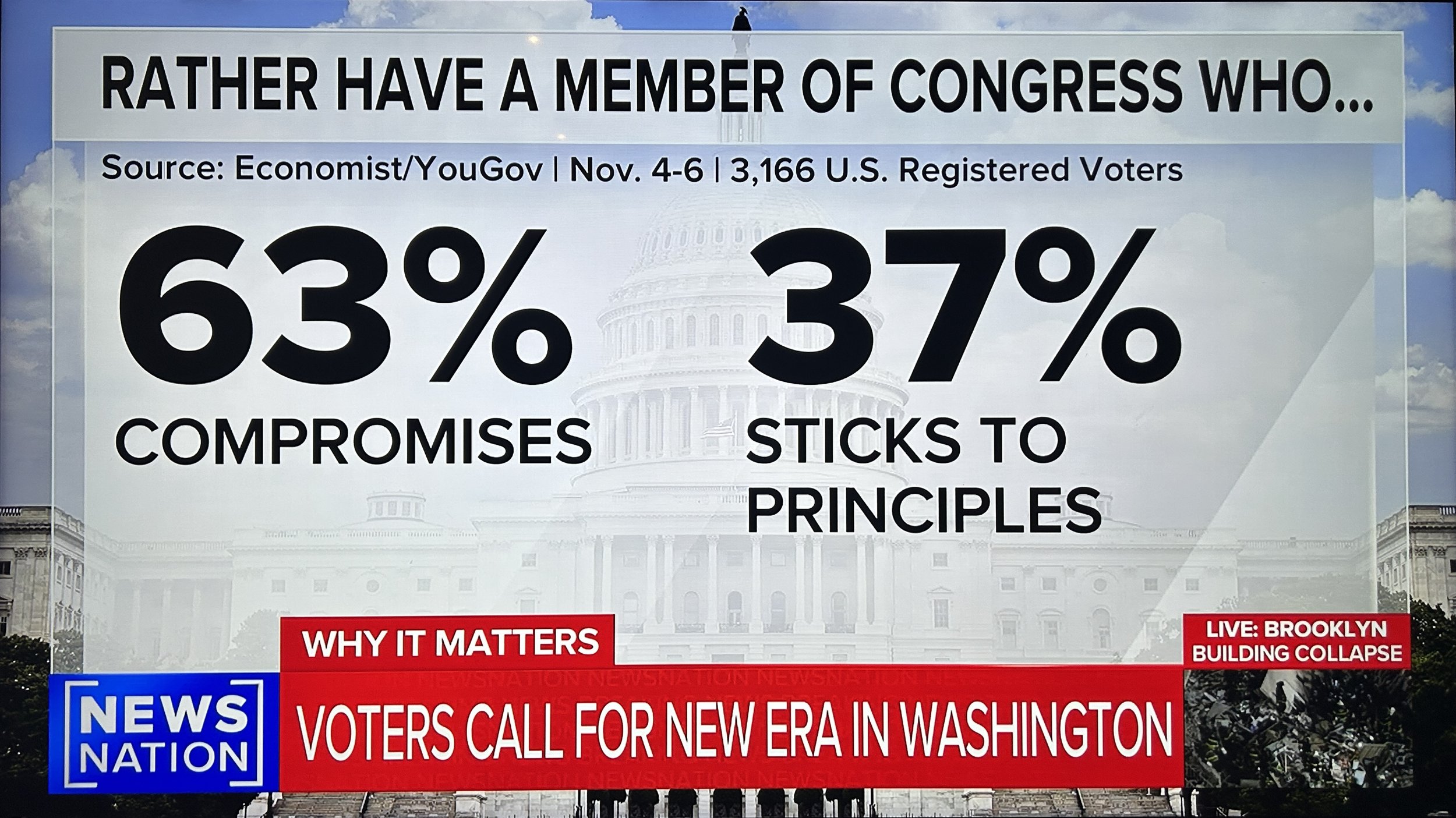
Separation of powers as well as checks and balances in our Constitution are designed to force compromise between parties so only policy change with bipartisan consensus will make it through all three branches of government. Change is therefore moderated. However, compromise has been a bad word in both parties due to political polarization over the past decades. Americans want compromise in Congress to solve the pressing issues facing our country: